2025. 8. 31. 14:35ㆍGlobal News
When the United Arab Emirates launched the Hope Probe (Al-Amal) in 2020 and successfully entered Mars orbit in 2021, the mission captured global attention. For the first time in history, an Arab nation had reached another planet. It was more than just a technological triumph; it was a statement of intent. The UAE was declaring to the world—and to its own people—that it intended to play on the frontier of human exploration. Now, with lunar missions on the horizon and long-term plans for space science, the UAE is pushing to transform itself into the Middle East’s first true space power.
The Symbolism of the Hope Probe
The Hope Probe’s success was not just about scientific data, though it continues to provide valuable insights into Martian atmosphere and climate. The mission carried symbolic weight: it showed that a relatively small nation, traditionally reliant on oil wealth, could leapfrog into high-tech innovation sectors with global relevance.
The Hope Probe also served as a source of inspiration across the Arab world. It rekindled interest in STEM fields among young students and reinforced the message that scientific excellence is not the exclusive domain of Western or Asian powers. In many ways, it marked the UAE’s entry into the “space club” of nations that drive human progress beyond Earth.
Rashid Rover and the Lunar Ambition
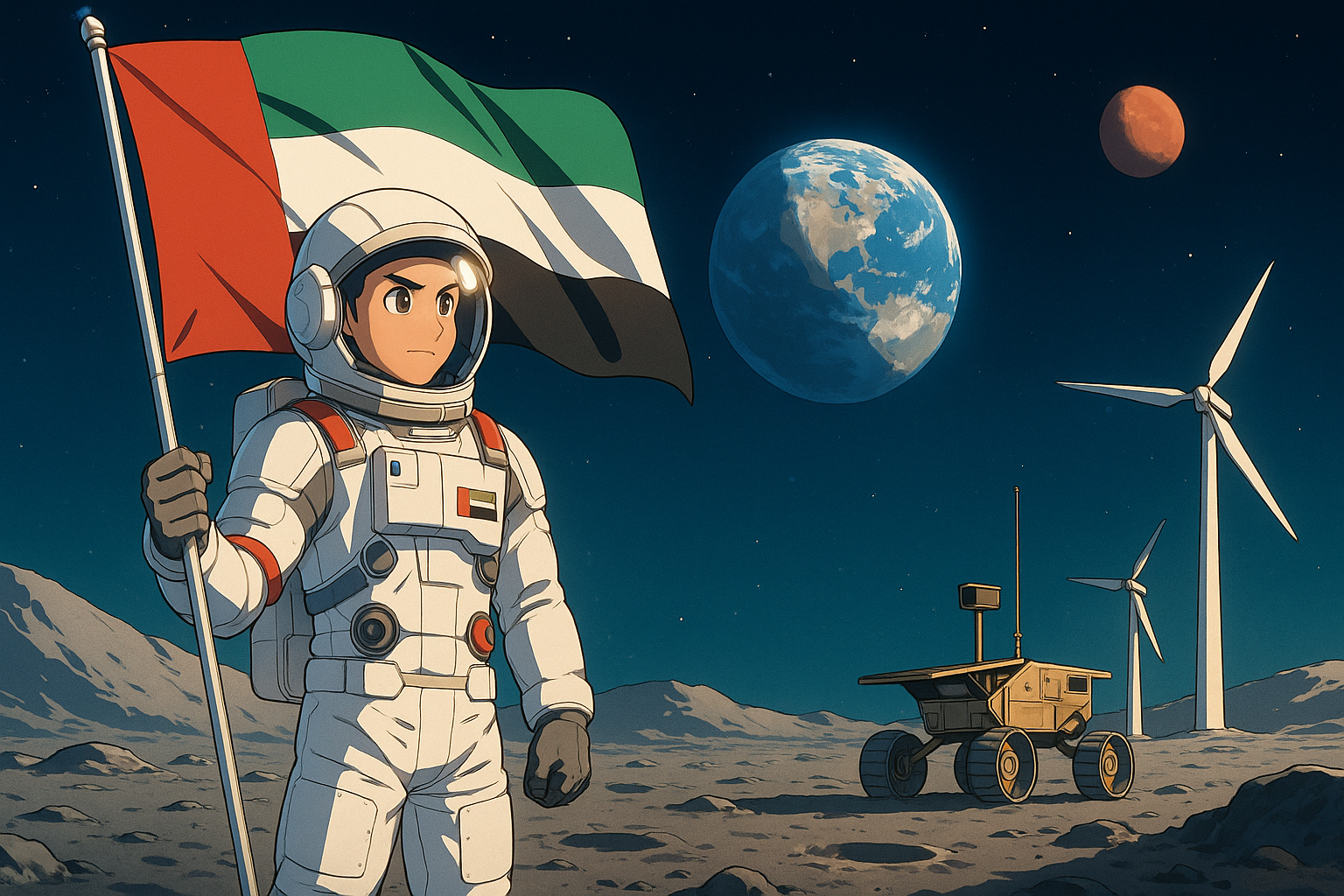
Following Mars, the UAE turned its focus closer to home: the Moon. The Rashid Rover, named after Dubai’s late ruler Sheikh Rashid bin Saeed Al Maktoum, represents the country’s first lunar exploration project. While the first attempt in partnership with Japan’s iSpace ended unsuccessfully when the lander crashed, the UAE framed the effort as “a valuable lesson rather than a failure.”
The second Rashid Rover mission is already in development, incorporating improvements learned from the initial setback. This reflects a critical mindset for any aspiring space power: resilience. By embracing iterative progress, the UAE shows it understands that space exploration is as much about persistence as it is about success.
Strategic Partnerships: Learning from the Best
The UAE has pursued collaborations with established space powers including NASA, JAXA (Japan), and ESA (Europe). These partnerships allow the Emirates to gain technical expertise rapidly while contributing financially and diplomatically to joint missions.
For example, Emirati astronauts have trained with NASA and even participated in missions to the International Space Station. This not only strengthens the UAE’s technical capacity but also elevates its status as a credible partner in the global space community.
Economic and Diplomatic Dimensions of Space
Beyond science, the UAE views space as a tool for economic diversification and diplomatic influence. By investing in space, the country stimulates its domestic tech ecosystem, encourages innovation in robotics and AI, and motivates younger generations to pursue careers in science and engineering.
On the diplomatic front, space serves as a platform for soft power projection. Just as the Mars mission elevated the UAE’s international standing, future lunar or planetary missions will reinforce its image as a forward-looking, innovative nation. For a country often associated with oil, real estate, and luxury tourism, space represents a bold rebranding as a knowledge-driven society.
Challenges and Criticism
Of course, the UAE’s space strategy is not without challenges. Space exploration is expensive, and skeptics question whether a small nation should devote resources to missions with uncertain returns. Moreover, reliance on international partners raises questions about whether the UAE can eventually develop independent capabilities.
Critics also argue that space exploration could serve as a form of techno-nationalism, more about prestige than practical benefits. Yet, supporters counter that the benefits—from advancing STEM education to creating high-tech jobs—justify the investments.
The Road Ahead: Toward a Space Economy
Looking forward, the UAE envisions space not only as a scientific endeavor but as a potential economic frontier. Officials have spoken about building a space economy that includes satellite services, Earth observation technologies, and eventually, participation in resource extraction from asteroids or the Moon.
By 2030, the UAE hopes to have firmly established itself as a regional leader in space innovation. Whether through another successful Mars mission, a lunar landing, or deeper engagement with international partners, the Emirates is determined to keep pushing boundaries.
Conclusion: A New Frontier for the Middle East
The UAE’s space program is more than rockets and probes—it is a narrative of transformation. From Mars to the Moon, the country is crafting a story of ambition, resilience, and reinvention. It demonstrates that nations, regardless of size, can pursue bold goals if they combine vision with investment and partnerships.
If the Hope Probe was the spark, the Rashid Rover and future missions may well be the flame that ignites a new era of scientific and technological achievement across the Middle East.